Wednesday, 16 November 2016

Mesh applications in candle filter and leaf discs


Candle filters
The metal mesh filters are made in both cylindrical and square shapes for standard industrial designs and are custom made to fit in the specific housing. These are made in sintered metal fiber and woven wire mesh.

The designs include heavy duty mesh that offer sufficient strength to withstand high differential pressures about 120 bar in fact higher too if needed. Low carbon steels are widely used to offer supreme corrosion resistance. The thread coatings are offered when essential to prevent the galling of material.

Sufficient care is taken to confirm that the design is free from stagnant flow areas that could slow down the polymer, cross-link and affect. The mesh are offered with internal volume reducers at the closed end to support in it and usually have flow divert characteristics to offer good flow distribution over the mesh when the polymer enters.

In the various designs, the open end can of the candle is made to sink into the tubesheet to confirm extending the filter medium.

For several applications, the Hastelloy mesh pleated candles are used for extended surface area and prolong active life. For few polymers such as polypropylene, it is discovered that the large viscosities refer that there is nominal flow among the pleats and on-stream life is not significantly more than a plain cylindrical candle. The plain candles are preferred in this media.

Uses:
a.       Polyester bottle
b.      Polyester fibre
c.       Cellulose acetate fibre
d.      Nylon fibre
Advantages and characteristics
a.       Sturdiness for cleaning and frequent use
b.      Prolong life
c.       Service at the high temperature media
d.      Supreme carbon resistance
e.      Good filtration area for pleated candle design

The candle mesh filters are customizable to fit any specific housing. They are made in sintered metal fibre and woven wire mesh. The filtration ratings vary from 3 to 100 microns, these are normally delivered with an external guard t secure the media and to permit reverse flow while cleaning. The candle mesh is easily cleanable with advanced technology. The candles are developed with separable hardware fitting and replaceable media to offer lower service costs. They are fit for any industrial designs and can be customized for specific housing.

Leaf discs
Leaf disc and solid plate filters are made for critical hot melt polymer filtration applications to achieve great gel control by offering smooth flow and hence higher gel retention on the filter.
Additionally to offer a great range of filter media, the leaf disc filters provide the great design characteristics ensuring low pressure drops to offer longer stream life. The firm structure permits several cleaning cycles hence decrease overall life costs.

With our extensive experience and great range of filer media, the application and design engineers can custom design adequate filtration products for every product and process, it includes support during design process to attain active performance for the long terms.

We characterize our media and elements service by evaluating them through flow tests, microscopy, chemical test, tensile test, metallography and quantification of polymer contaminant with image analysis. 

Tuesday, 8 November 2016

Waterjet cutting of superalloys for aerospace applications

The waterjet cutting system implements Dynamic Waterjet Technology. It has active tolerance control to offer unprecedented speed, accuracy and versatility. The patent system develops components with tight tolerances even at the large paces that practically discards taper by using angular compensation. It utilizes an advanced sophisticated motion system that comprises of new mathematical cutting models to monitor the small articulated wrist associated with the cutting head.

It is possible to title the cutting head in any direction by using the wrist to compensate the stream lag and taper occurring with the traditional waterjet cutting systems. For the traditional waterjets, it is essential to decelerate the process to reduce or discard the finished component tolerance errors because of the stream lag and taper. By using waterjet, it is possible to overcome these drawbacks. The position of cutting head can be dynamically controlled by using software that can level the tilt ant rotation required at the various incremental points with a cutting path.

An appropriate cutting speed can be maintained with this software to keep the components taper- free and within tolerance. It is essential to increase the tilt while increasing the cutting pace and in many cases, fast cutting speed can be obtained with the potential to tilt the cutting head. Therefore, Waterjet can develop excellent components at the larger speeds as compared to the traditional waterjet cutting equipments.

Wateret cutting machine capability
a.       Accuracy of +/- 0.0015 inch per 3 feet and speed limit about 0 to 500 ipm
b.      Cutting area about 2m x 2m cutting bed with lengthy pieces having indexing potential
c.       Several tolerance levels and fine cut
d.      Mix and match edge styles on the same part depending on their use
e.      Nominal machining is required on components because of tighter tolerances and outstanding edge quality and highly available due to no need to handle the scrap
f.        Nesting, flattening, kitting, toll cutting and JIT service
g.       Small edge stress and no heat affected region so fit for the elevated temperature and corrosion resistance applications.

Benefits
a.       Cut components 25 to 400% more quickly as compared to the traditional flat stock waterjet cutting devices
b.      Cut various materials such as glass, metal and composites
c.       No additional finishing is needed
d.      Improve cut part tolerances and shape at the significantly high speeds
e.      Virtually prevent aper
f.        Decreases component cost
g.       Cut components by using CAD file and draw directly into FlowMaster

Applications
1.       Aerospace- Titanium bodies and engine materials constructed from titanium, aluminium and heat resistant alloys such as Monel 400 and others.
2.       Automotive- Truck bed liners, interior trim, firewall
3.       Gasket for aircraft, automobile, marine, copper and rubber
4.       Stainless glass, Outdoor stone and flooring, wall inlay, flat glass
5.       Acrylics , plastics, ceramics, stainless steel, Inconel, mild steel, titanium, brass

The waterjet cutting technology has made it easier to cut the corrosion resistant alloys that are usually a hard material that need expensive cutting processes. 

Thursday, 3 November 2016

Challenges during Inconel grade machining and work hardening

A winning strategy for effective machining of Inconel, includes wise choices of cutting tools and parameters. A common procedure is 3V precision that s used to machine the Inconel grades economically with cycle times about 24 hours. To efficiently use the Inconel components to continue the procedure and turning a profit, the 3V procedure has become more economical as compare to other machining procedures in cutting this metal. The tools and methods used were a beginning point, however the aim is at meeting the challenges and costs related with this alloy.

The procedure is successful because of the dedication, the procedure continues to draw on the type of promise and engagement as the facility gives the hope to handle the hard metals effectively.
The combination of CNC machines in 3V service includes horizontal and vertical machining units. It is essential to have these units otherwise you do not understand the machining. Efficiency comes through fine tuning process for a machine tool thereafter replicating the success by implementing the same method on the similar machines.

On each processing of Inconel alloy, sufficient materials are set up and retain sufficient metal removal rate with every of these pieces therefore the complete machining cycle time is about 24 hours or low. A time length of 24 hours is trusted to be perfect for machining time since an operator who begins on a cycle lasting this long can determine that he will have this job to unload at the same time on the second day. An operator who invests the day setting up and launching single 24 hour machining after another hence has his next day already planned. They need to visit the machine again and load new components or settle new job.

Attaining cycle time quicker than 24 hours is not essentially an achievement. Neither is receiving a large count of samples in the setup if the density has an effect of increasing cycle time above 24 hours. If these changes can develop a cycle that is out of step in balance with other procedures, and breaking rhythm would result into waiting or hurry, causing error or efforts in vain. Specifically in Inconel, 24 hour standard brings lavishness as it refers that there is no pressure to drive the process to attain the last incremental increase in the machining results.

In machining of Inconel718 grade, the work hardening is more dangerous. The metal can be cut productively, however quick cutting has a way of redeveloping into unbeneficial cutting as the hardened metal begins to rapidly affect the costly tools.

The small speeds and feed rates are utilized initially with the parameters bumped after every successful run as long as quick wear sets in the shop arrives at a process for machining a suitable quantity of these components in a cycle of only within 24 hours.


If the roughening tool is worn then the finisher damages quickly and this wear can eventually affect the success of the unattended cycle or sellablity of the component. 

Saturday, 29 October 2016

Which is best- Nichrome or Nickel-200 or Titanium or Kanthal or Stainless steel

Various wire materials are used to develop coils. This post describes the difference between nichrome, Nickel 200, titanium, kanthal and stainless steel. These wires will meet the serve purpose, there are basic fundamental applications that place the world apart. It is because as we dig deep in the science of the various wire types, it help you distinguish which wire suits your needs best.


Nichrome Vape Wire
Nichrome is all known for its oxidation resistance properties by which it can perform at the high points without being attacked by oxidation. Nichrome is a popular electric heating element, hot wire foam cutters and domestic equipments and tools. With its potential to quickly heat up with small time, Nichrome is the popular choice for the most of e-cigarette coils and cloud-chasing constructions. As compare to Kanthal, Nichrome 80 wire shows lower melting point and lower highest service temperature. Therefore the service life of nichrome will be generally smaller than kanthal.

FeCrAl Vape Wire
Kanthal wire popularly developed its appearance in the e-cigarette just after Nichrome and rapidly became famous among the coil manufacturers. For its low price, extensive availability and actually i can be made in several gauges, Kanthal wire offers numerous combinations of various size coils creating various resistances for any vape style. Wire made from Kanthal serves at the higher temperature and has higher melting point as compare to Nichrome, offering a longer service life. Many people believe that Kanthal wire goes off taste due to presence of iron, but not all. The service of kanthal wire  makes it a primary choice of beginners who are looking for the learning opportunities.

Titanium Wire
Titanium wire is somehow new in the market in context to nichrome and kanthal and is used in several sub-ohm tank coils for controlling temperature. It is stronger as compare to Nickel 200 that makes it easier to use. Titanium offers double times resistance as compare to nickel 200 making it fit for achieving required resistance more easily. A factor to be worried about Titanium is that it heats up to the ignition level. If the metal heats, you will see fire that cannot be handled by any fire extinguisher  in which case you have to allow it burning out. Additionally the development of titanium dioxide is also not good for health.

Pure Nickel wire
Nickel 200 has very high temperature coefficient. This is the major reason that many people decide to use Nickel 200 wire for the initial temperature control mod. Nickel is a soft wire and springy, making it harder to work as compare to kanthal or titanium. It is a supreme concept to space the wraps apart so the heat is uniformly distributed over the wire length. For any warp in coil that are in contact of each other, it permits uniform heat supply with tight wraps, although, it can take time.

Results

If you are confused about which is the suitable wire, ask if you will use temperature control or use the variable wattage? This will help you in your work while choosing which wire is suitable- Kanthal, stainless steel and Nichrome. 

Thursday, 27 October 2016

Industrial quality conveyors for mining to food applications

The woven wire mesh has the common uses in chemical, plastic, automotive, aerospace, electronics, industrial screening such as in mining, lab sieving, food processing and several other applications. The woven wire cloth has a great aesthetic appeal. The wire mesh is made from the various materials such as:
1.       Steel
2.       Stainless steel
3.       Non-ferrous materials such as aluminium, nickel,  Monel and copper
4.       Super alloys such as Inconel, Incoloy, Hastelloy etc.

The choice of material, quality and treatment are crucial for the characteristics of the woven wire mesh product. Specific needs can be met by using the particular set of materials. The cost for various materials varies broadly. Becoming aware of which is the best fit for specific applications and which processes can be used are particularly crucial for ensuring the meeting needs for function, stability, safety and economy.

We have designed he processed for quality assurance. For reception of wire materials and production and before the delivery our lab conducts special analysis along with the classic materials and quality checks.

Our performance is based on experience, regular research and development of products and manufacturing process, along with the skills of our team. This combination of skills and innovation enable us meeting the needs of our customers.


Mesh belts
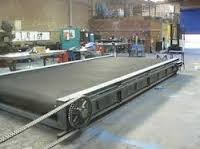
Heanjia Super-Metals is a leading supplier of perforated metal conveyor belts that are used across the industries including heat processing, forging, foundry, food processing, snacks, ceramics, glass, automotive and others.

Our conveyor belts fit in almost all applications including tight wire mesh for versatile and conveying small components, smooth surface belts for perfect transfer, belts with bog openings allow easy flow of air and water for simple cleaning of your product. These belts are fit for carrying metal components through copper and aluminium brazing furnaces, bronze and iron components through sintering furnaces, textiles, chemicals for dryers and other applications in which the belts are used for washing, annealing, cooling and polishing of materials.

The metal woven wire mesh conveyor is also used in the food processing industry in clean dry, bake, cook, freeze, salt, can and others.

Our metal woven wire mesh is made in the different sizes to be fit for any process, a wide range of materials are used from carbon steel to high strength alloys. Our conveyor belts can carry light to heavy loads and they perform excellence without the help of an operator. They can serve at the different temperature limits from low to high and withstand the diverse application media such as acids, alkaline, chemical corrosion, abrasion and impact.

The belts are made in the various types such as: furnace belts, mesh belts, baking, metal woven mesh, lehr bels, positive drive belts etc.

Heanjia is specialised in quick deliveries for immediate requirements. We offer the following conveyor belt types:

Balance, Cordweave, Universal DBL balance, chainweave, grid link, precision balance, flatwire and single.


We manufacture heavy duty belts for mining and other industries around the world. Our skills in the significant advancement in the conveyor belt design for the strong and heavy belts are acknowledged by our customers. 

Monday, 24 October 2016

Behavior of Monel 400 in Arabic Gulf seawater

Monel 400 is exposed to the different natural aerated seawater at the different times in the Arabian gulf. Monel is a solid solution alloy that can is hardenable by cold processing. It is widely used in the different applications such as chemical processing, gasoline, fresh water containers, crude petroleum stills, pumps, propeller shafts, seawater fixtures etc. The corrosion of alloy 400 reduces when more nickel content is added.

The natural sea water was collected from Arabian Gulf, Monel plate was used. Alloy 400 rods were used for electrochemical measurements to develop the coupons for use in the sea water. To evaluate the pitting corrosion of alloy in the salt solution, the SEM and EDX tests were performed. The presence of oxygen and carbon in the alloy result in the development of oxide layer and the pit is found to be covered with this layer in addition of other materials.

An enlarged space in the pit occurred on the surface of alloy that is exposed to free aerated stagnant salt solution for 160 days. It is found that the developed pit is deep and broad with corrosion materials stacked in few regions. The presence of chloride ions increases the potential difference across the layer. The regular development of voids result into localized damage of the passive layer that dissolves faster than other components.


The affected regions were found to be enriched of copper whilst the regions around the active sites have higher nickel concentration. The corrosion of alloy 400 occurs by the specific leaching of nickel from the alloy offering a spongy copper rich material in the pit base.

The chlorine and sulphur elements present in the marine water collect in the pit and interact with iron and nickel that are present in the alloy therefore iron and nickel are slightly present in pit as compare to their real availability in the Monel alloy.

With the passage of time, the layer dissolves because of pre-immersion of alloy’s electrode in the salt solution, resulting into pitting. Pits develop in the areas where the adsorbed oxygen on the alloy’s surface is replaced by the vigorous particles for example chloride ions that are found in the Arabian Gulf sea water. It is because the choride ions have smaller diameter that allow their entrance in the protective oxide layer and replaces oxygen at the places where the metal and oxygen are not strongly connected.

The development of corrosion materials nominally secures the alloy because the potential reduced in the positive direction. The reduction in the corrosion rate is made possible by the development corrosion materials as wells as the potential of the salt solution to develop layers on the surface of alloy.


So overall the Monel alloy 400 receives general and localized corrosion in the stagnant Gulf seawater. The pitting is noticed on the alloy caused by chloride ions and dissolution of nickel. Increased exposure reduces the current and increases security potential in the negative direction. The pitting increases with increasing the immersion time length in the sea water.

Wednesday, 19 October 2016

Durable perforated metal solutions for aesthetic applications

Heanjia Super-Metals offers perforated sheet metals for facades, sun screens, balustrades, cladding, screening, fencing and roofing. We help you in completing your building project with perforated metals. The drawings of sheets are created for your approval before fabrication. Moreover the sheets are also made for your facade in sequence and the count of specific sheets that is advantageous when configuring sheets on the large facade project.

We not only perforated even also cut, bend and shape that is essential for the whole essential finishes. The flat perforated sheets are delivered to you or if needed, we also provide secondary operations such as cutting, bending and surface processing.  

With the higher energy demand, it is essential to focus on the reliable building design and discovering the reliable way to handle the temperature and climate conditions in the buildings. If it is for a new project or the refurbishment of an existing building, the sun screens in the perforated or expanded sheet are constructed from the reliable materials and offer an environmentally friendly solution that helps limiting the need for ventilation and quenching hence reducing the energy use.


Perforated Sun screens
The screens offer the benefit of maintaining the privacy without limiting the view. They permit sufficient magnitude of natural light in the building during the daylight.

With a large count of patterns and screen solutions for you to select from when choosing your perforated screens. If you require a single screen or several thousands of square meters, you can find individual solutions suiting your special needs.

Balustrades
When you are looking for any range of perforated project, Heanjia offers vast range of solutions to make it feasible for you easily. We offer you the privilege of perforated sheets for staircases, balconies and railings and choosing the recommended material such as stainless steel, aluminium or carbon steel.

We offer the wide range of selections in perforated metal sheets for balustrades. Using the perforated sheets for walls and roofs, it is feasible to combine aesthetic factors with the requirement for suitable sound conditions. We offer a wide range of perforating designs that are made to assist architects in designing the solutions to enhance the sound absorption as well as visual appearance of a wall or roof. Although, if you are unable to find the suitable pattern that you are seeking for, we help designing the custom pattern to suit your needs.

The perforated metal panels with sound fiber can be the perfect solution to act as sound absorber hence offering a suitable service media.

With stainless steel and aluminium perforated metal, an aesthetic solutions can be delivered for new or renovated building projects.


The fences and screens in the perforated metal are widely used beneficially in the diverse range of applications. For instance, if you need a solid and secure solution for shielding a region or if you need to make a shelter then perforated metal is the prime solution in such cases. The perforated metal offers adequate covering and flow of light and air, hence it is fully reliable for use.